

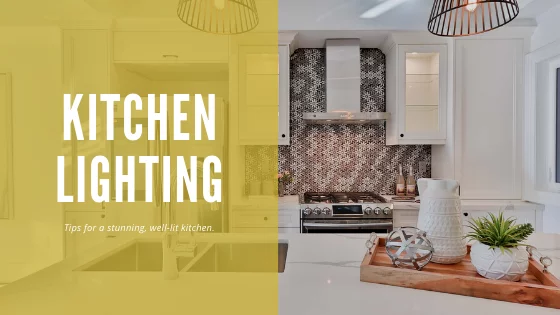
Whether you’re building a new home or updating your current one, lighting is something that can make or break a space. And sadly, it’s something tons of people tend to overlook! Before you go tearing out your kitchen from top to bottom, make note of these 3 major lighting tips to ensure a stunning, well-lit kitchen!
In traditional kitchen design, there are 3 main areas: the sink, the range, and the refrigerator. These areas used to define how a kitchen was designed for ultimate efficiency. In any functional kitchen, you want to maintain a “work triangle” between these three areas, with the sink being somewhat central between the range and refrigerator. However, newer, more modern kitchens are being designed a bit differently. While designers still keep the working triangle in mind, function ultimately comes from having dedicated “zones.” New residential kitchens tends to have anywhere from 4 to 6 zones. Ideally, each zone should have its own dedicated lighting, whether that’s a recessed light, or a statement piece, whichever makes sense for the space.
These zones are:
You can learn more about these zones from this great resource on Houzz!
Functional lighting doesn’t always have to be hidden! If you have the right space, add visual interest with statement lighting. Pendants are great for hanging above an island, and chandeliers are gorgeous above dining tables. Choose light fixtures that go with the style of your home to keep your home feeling inviting cohesive. If you’re thinking about adding glass cabinets, be sure to use glass shelves as well! Standard wood shelves will not allow light to flow through the entire cabinet. Under-cabinet lighting is also another easy way to add a wow-factor to your kitchen. Have the under-cabinet lights on their own switch so that you can choose whether to have them on or not. Most electricians will suggest this if it’s possible.
Lastly, you’ll want to make sure you’re using the same temperature of lighting throughout the entire space. If you have warm white lighting in the ceiling, you won’t want to use bright white for statement lighting or you’ll see a drastically different color. Using different temperatures can also give off weird shadows and dead-spaces where lighting might not be as bright. Keeping the light temperatures the same will create a cohesive space instead of breaking up the room into oddly lit sections.
If you need help with more lighting tips for a well-lit kitchen, we’ve got tons! Let us know if you’re planning a remodel where you need some help with lighting and electrical choices. We’d love to assist you in planning out your dream kitchen while making sure that it is safe for your entire family for years to come!
How Do I Know If a Circuit Breaker is Bad?
Where Do Your Electricity Costs Come From?
Residential Electrical Services Provided By Point Electric
